
01A continuous envelope
Insulation that wraps the building without gaps or thermal bridges. This is what makes a house the same temperature in every room, floor to ceiling, in January and in August.


The envelope does the work, so the mechanical systems barely have to.
The way a project is managed and the way it is built come from the same place: doing it right the first time.
Most homes are built to the minimum the code allows and then heated and cooled hard enough to cover for it. Steady State builds the other way — the envelope does the work, so the mechanical systems barely have to.
Passive House principles are applied to the extent that makes sense on every project. Full certification is right for some projects and not others, and you’ll get an honest answer about which yours is.
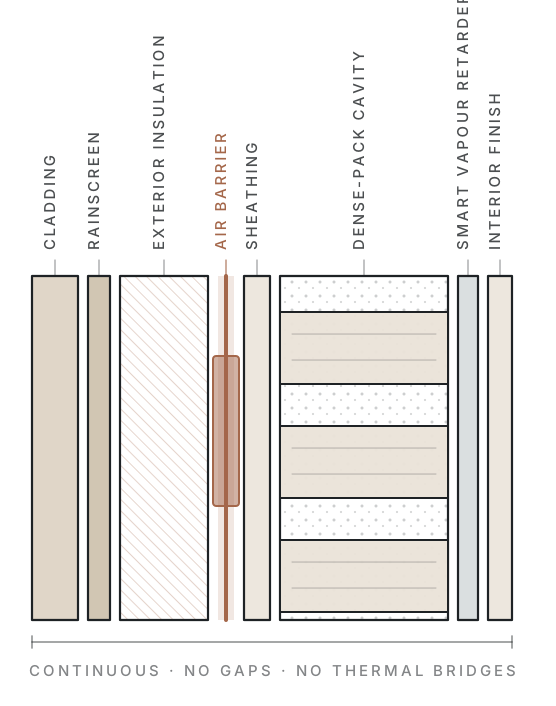
A wall like this costs more than a code-minimum assembly. You’ll see what the difference is and what it gets you in comfort and running cost, then decide — the same as every other decision on the project.
Insulation that wraps the building without gaps or thermal bridges. This is what makes a house the same temperature in every room, floor to ceiling, in January and in August.
Air leakage is what makes a house drafty, dusty, loud, and expensive to run — and it carries moisture into walls where it does real damage. Testing happens with a blower door during construction, while it’s still cheap to fix, and again at completion.
A tight house deserves deliberate ventilation. Filtered fresh air runs continuously to bedrooms and living spaces while stale, humid air leaves the kitchen and baths — with the energy already spent conditioning it recovered rather than thrown away.
This is usually the largest single comfort upgrade in a house. No cold glass, no condensation on the frame, no unused seat by the window in winter. Selecting high-performance windows is an investment that pays for itself in both enjoyment and efficiency.
Water always finds a way in. Wall and roof assemblies here are designed to keep water out and to dry effectively when they do let moisture in. It’s the difference between a house that lasts a century and one that fails quietly over time.
When the envelope does its job, the equipment can be small. Sized to a real load calculation instead of a rule of thumb, it runs quieter, costs less, and lasts longer.
Lower energy bills and more responsible use of materials come with all of this. They are the result of building well rather than the only reason to do it.

Tell me about your project — site, timeline, budget, and what you’re hoping for.