

Steady State Construction
Two people standing on a bluff above the ocean in morning haze
How we work

Most of the stress of building comes from not knowing.

Six stages, and you’re never wondering what comes next.

The problem

Construction is an industry full of changes, hidden costs, and vague answers.

Most of the stress of building comes from not knowing — what it will cost, when it will finish, what just changed and why.

Not every surprise can be removed from a construction project. But you’ll hear about them early, they will be priced honestly, and you’ll never find one out on your own.

01

Before the drawings

The best time to meet is early, before anything is committed. That means a walk of your site, a conversation about what you’re actually after, and a real budget range based on local numbers — not a figure designed to win the job and get revised later.
02

Design

Decisions get priced alongside your design team as they’re made, not after. Every material choice has a cost implication both in itself and on the install process, and you should know it in real time rather than discovering it at bid. Where a performance detail costs more, you’ll see what it costs and what the upside is, and it’s your decision to make.

03

Planning

Before anyone picks up a tool, the project gets walked with every trade partner to lock scope, budget and schedule. Then you get a contract with every expectation written down. Most disputes in construction come from something that was never actually agreed to. Better to spend the time up front and start right.

04

Build

Every trade supervised, all site logistics and material deliveries managed, and the jobsite kept clean. You have direct access throughout — one number, one person. Weekly progress reports and bi-monthly invoicing, without you having to ask. If something goes wrong, you’ll hear about it right away, along with the plan to make it right.

05

Handover

You walk the finished project before you take possession. Anything outstanding gets documented and resolved rather than left for you to chase. Then a proper handover of how the house actually works — the ventilation, the controls, the maintenance — so it performs the way it was designed to for as long as you own it.

06

After

Two walkthroughs after you move in: one at six months, one at a year. Anything that has failed because of how it was built gets fixed — not argued about. Most of what is worth catching shows up in the first winter rather than the first week, which is why those visits are scheduled rather than left to chance.

And how we build

The way a project is managed and the way it is built come from the same place.

Doing it properly the first time, because someone lives with the result.

Why high performance

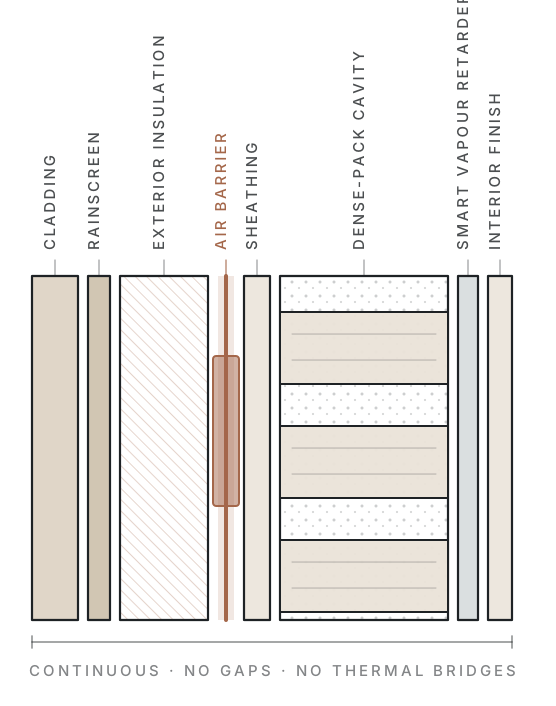
Section drawing through a high-performance wall assembly
The preferred wall assembly on a Steady State project.
Sunlight on the surface of the ocean
Let's talk

Start with a conversation.

If you’re still early on and there aren’t drawings yet, that’s the best time to reach out.

Get in touch